

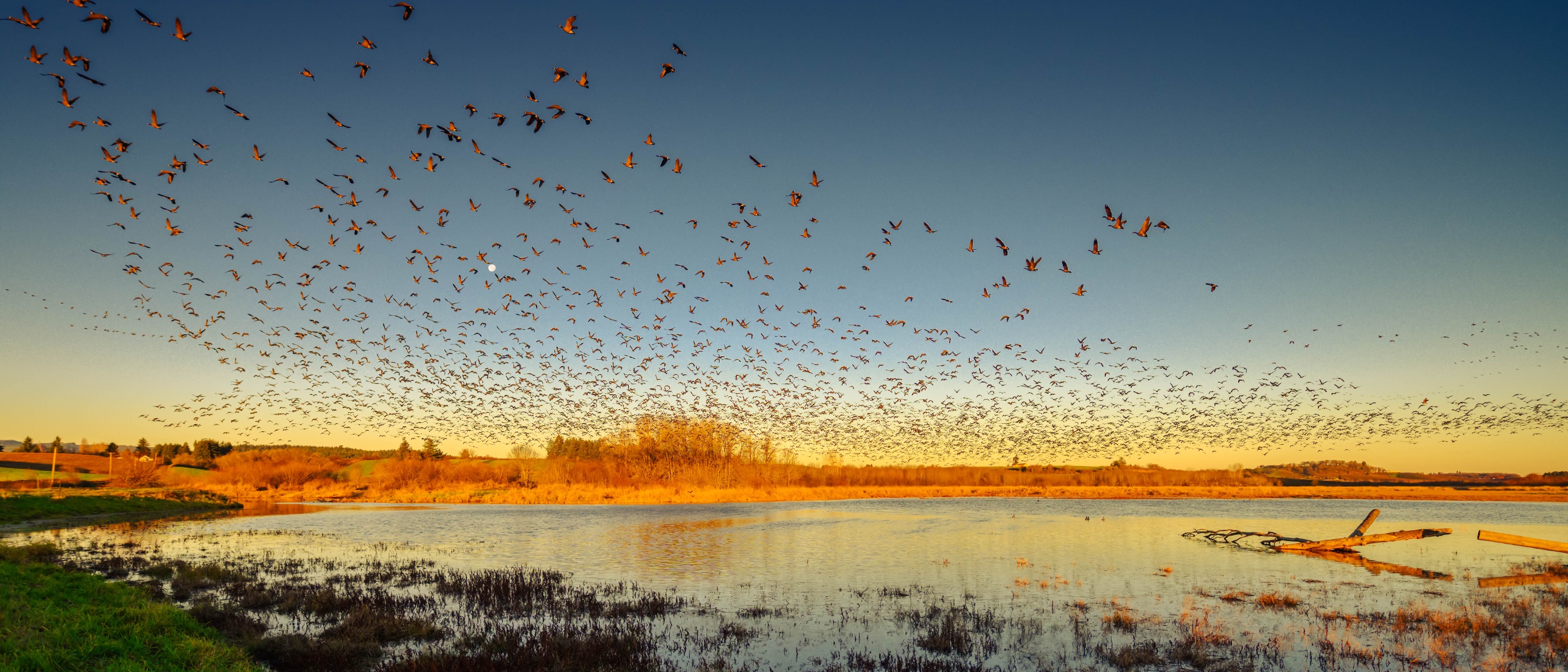
Your Guide to the Baskett Slough National Wildlife Refuge
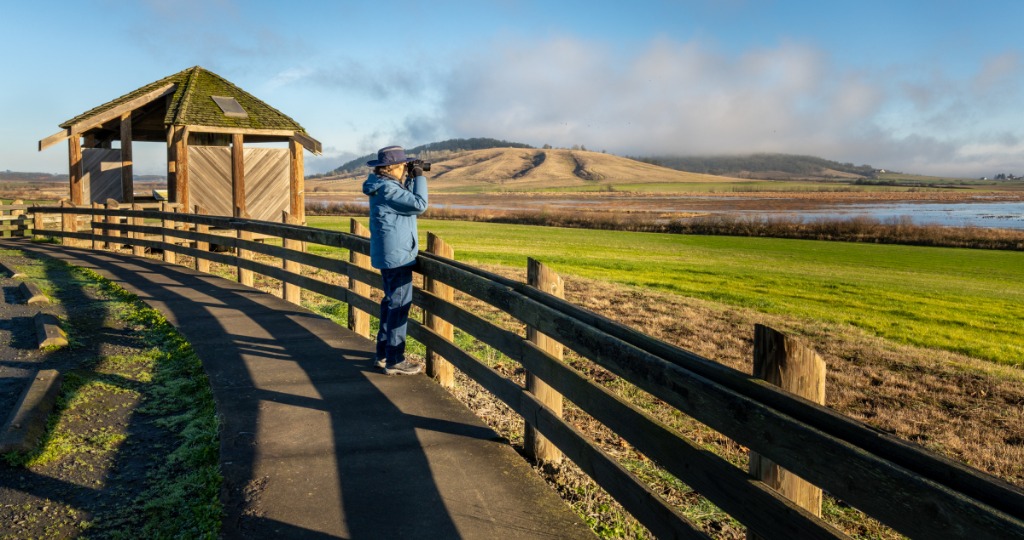
Photo Credit: Eileen Hartmann
Public lands are established for all sorts of reasons. State-run parks are created to protect important landscapes, while national parks and monuments may celebrate beautiful natural spaces, historic sites, or culturally sensitive areas.
But only the national wildlife refuge—of which there are more than 570 in the United States—is created and maintained exclusively to protect native plants and wildlife. That means you’re more likely to see colorful wildflowers along scenic trails, elk and deer crossing wide-open meadows, and raptors looking for dinner from the perch of an old-growth oak tree.
Visitors enjoy access to three national wildlife refuges in the Willamette Valley, and they’re all special for their own reasons. But there’s something especially remarkable about Baskett Slough National Wildlife Refuge. The 2,500-acre refuge is where a butterfly, once thought to be extinct, flourishes today alongside a popular hiking trail. It’s where you may spy more than 250 species of bird from the comfort of your vehicle and picnic beneath towering stands of Oregon white oak. “Everything we do is dedicated to making a home for wildlife,” says Samantha Bartling, visitor services manager for the Willamette Valley National Wildlife Refuge Complex.
Keep reading for more about what makes Baskett Slough National Wildlife Refuge such a special place—and for ideas on how to enjoy your next visit
Where is the Baskett Slough National Wildlife Refuge?
Baskett Slough National Wildlife Refuge is about 14 miles west of Salem, near the intersection of Oregon Route 22 and Highway 99W. If you're visiting the refuge on your way back from the coast, it's about 47 miles—roughly a one-hour drive—east of Lincoln City and Pacific City.
The refuge is also just 30 miles north of Corvallis and about 20 miles south of McMinnville, both via Highway 99W, making it a convenient stop from many of the Willamette Valley's most popular destinations.
What Makes Baskett Slough So Special?
Here’s a breakdown of why Baskett Slough is worth a stop on your next trip to (or through) the Willamette Valley:
- Abundance of plants and wildlife: You may spy colorful wildflowers in spring and, all year long, a variety of wildlife—including more than 250 species of bird. Keep an eye out for trumpeter swans, sandhill cranes, dusky Canada geese, and more; different species can be found around the refuge in each season, so no two visits are ever quite alike. “That amount of diversity in plant and bird life is really unmatched, and it’s right in our backyard,” Bartling says.
- Wide variety of ecosystems: Within the refuge’s 2,500 acres, you’ll find wet and upland prairies, mudflats, stands of Douglas-fir, oak savannas, and even agricultural fields that are farmed to provide food for the dusky Canada goose. That variety supports the wide range of wildlife that lives in (or passes through) the refuge each year.
- Rare wildlife: In May and June, keep an eye out for the rare Fender’s blue butterfly along the Rich Guadagno Memorial Trail and along the Baskett Butte Loop Hike. The colorful butterfly was thought to be extinct until 1989, when a local science teacher saw it in the refuge. Learn more about the Fender’s blue butterfly and its miraculous recovery.
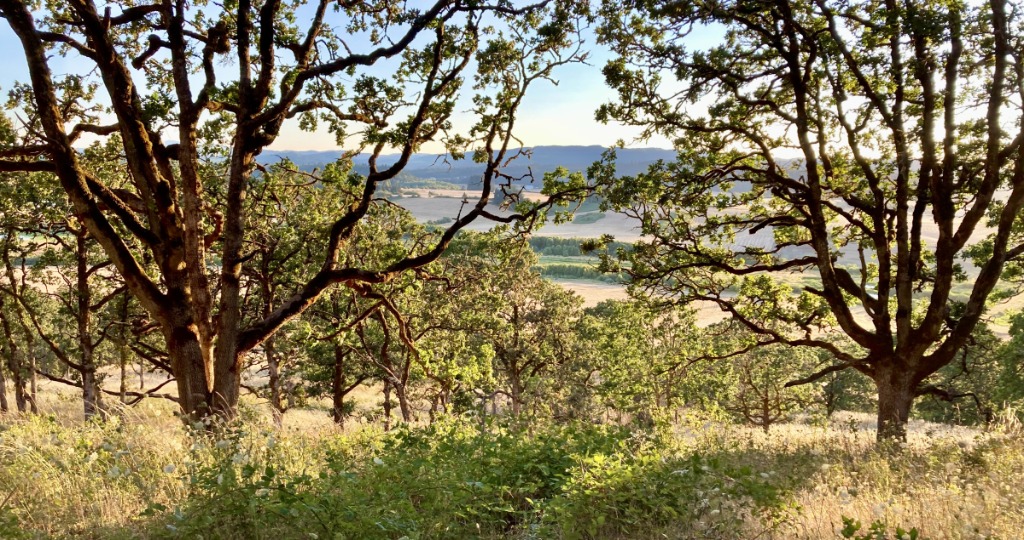
- Oak savanna and woodland: Oak trees once covered most of the Willamette Valley, but most were cleared to make way for farms. You’ll see plenty of gnarled Oregon white oaks around the refuge today, and Bartling says each tree can support more than 200 species of wildlife—including insects, birds that feed on those insects, woodpeckers who hide acorns in the trees each winter, shrews who burrow around the tree’s base, and raptors that perch on the oak’s branches.
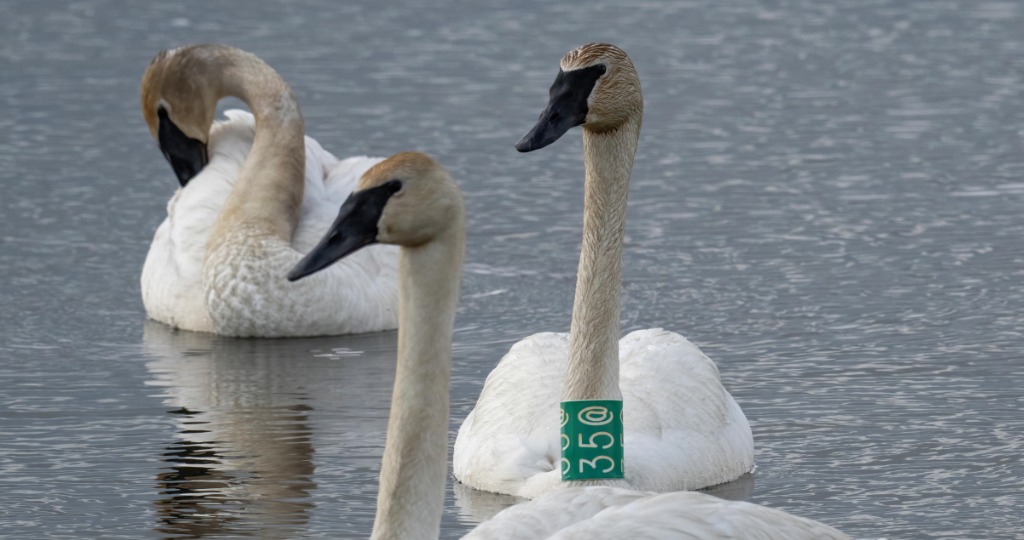
Photo Credit: Larry Clack
What is There to Do at Baskett Slough National Wildlife Refuge?
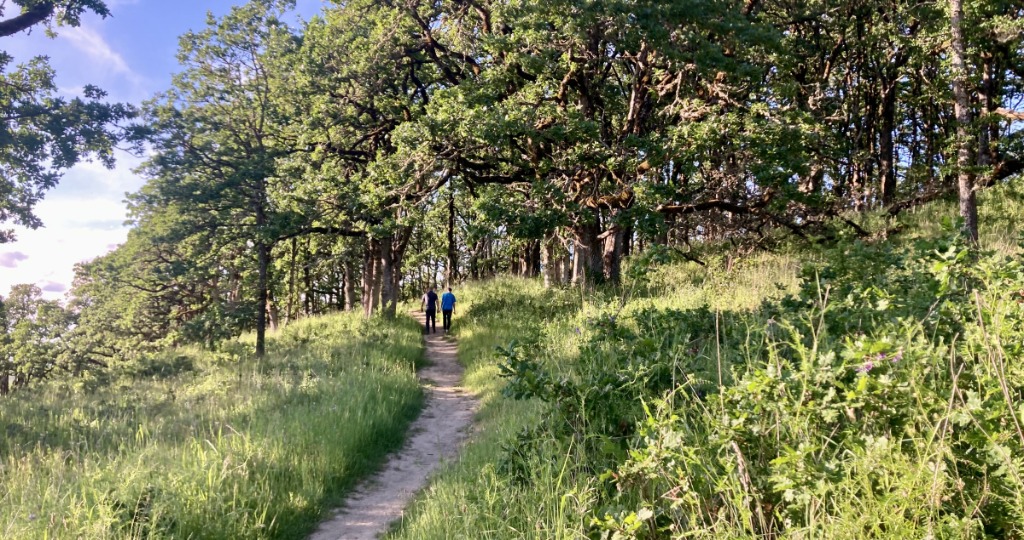
Activity options at Baskett Slough are limited only by your time constraints. “No matter what you're into or how you like to enjoy nature, there's an option for you,” Bartling says.
Here are a few popular activities at the refuge:
Rich Guadagno Memorial Loop Trail: Named for a former refuge manager who died while helping to bring down United Flight 93 on September 11, 2001, the 1-mile Rich Guadagno Memorial Loop Trail is one of the top things to do at Baskett Slough. “If you hike up to the top of that trail, the view you get is one of the highest points in that part of the valley—so you can see for miles in 360 degrees,” Bartling says. “It’s just beautiful.”
The trail heads through a grove of Oregon white oak, climbs Baskett Butte, and connects to other trails—so you can stitch together an outing that suits your time and physical abilities. Keep an eye out for springtime wildflowers and wildlife (such as the Fender’s blue butterfly), and enjoy expansive views of the surrounding refuge. Learn more about other hiking trails at Baskett Slough National Wildlife Refuge.
Convenient bird-watching: Colville Road heads through the heart of the refuge, passing several disparate ecosystems that attract a variety of waterfowl and migrating birds, and makes bird-watching easy: Simply pull over where you can, and keep an eye out. Bartling says a number of logs have been placed along the road, providing basking space for Western pond turtles and resting spots for resident waterfowl. You might also see short-eared owls emerging from their underground nests around dusk from along the road.
Picnicking: If you picked up fresh fare at one of our farmers markets or plucked a few goodies at one of the u-pick farms in the Willamette Valley, Bartling says the oak trees make excellent (shady) picnic spots.
What to Know Before Visiting Baskett Slough
It’s easy to have a great time at Baskett Slough National Wildlife Refuge—but knowing a few key rules will add to the experience and help you make the most of your visit. Here’s what to know before visiting.
Admission fee: It is free to visit Baskett Slough National Wildlife Refuge; no passes or permits are required.
Seasonal closure: The refuge is open dawn to dusk year-round, but certain hiking paths, like the Morgan Lake Trail and Moffitti Marsh Trail, are closed April-September to support waterfowl who rest and roost in the refuge. That said, the rest of the refuge remains open for hiking, bird-watching, picnicking, and wildlife-watching.
Pets: Dogs must remain in your vehicle at all times throughout the refuge. Bartling understands that Fido makes a good hiking companion—but stresses that dogs can leave a scent that may linger and are seen as predators to the animals who live at Baskett Slough. “As a result of that predator smell, or knowing that a predator has been in that area, it’s going to change the behaviors of the animals that live there. They’re going to steer clear, which could be make-or-break to an animal that uses that path to travel for food or to get back to where they need to be.”
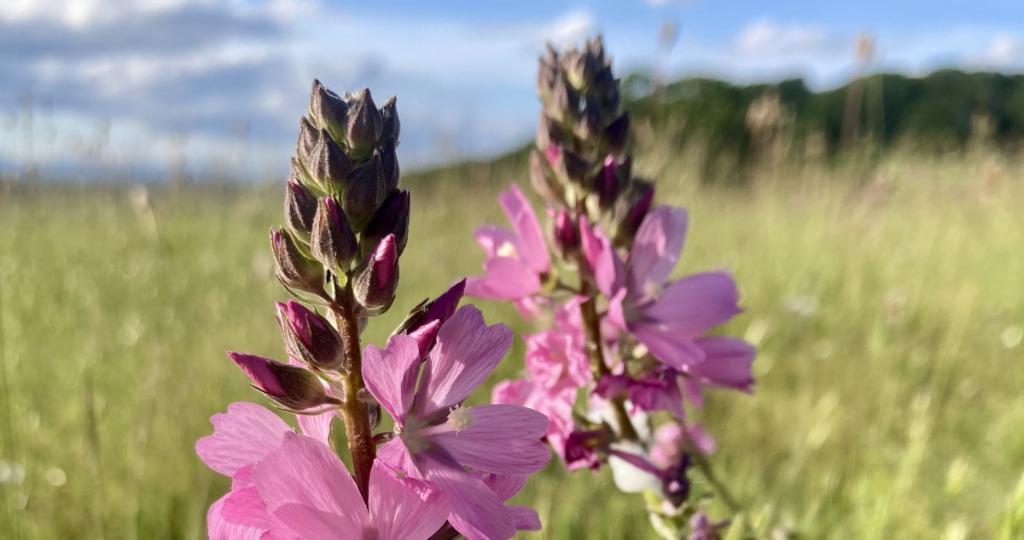
Wildflowers: Tempting though it may be, please leave the refuge’s springtime wildflowers for the next group of visitors. These colorful plants may provide habitat for some insects and support the continued growth of other species—such as the Fender’s blue butterfly.
Running: Strange as it sounds, visitors are not permitted to run on any trails at Baskett Slough. “Running will trigger a flight response in an animal,” Bartling says. “Animals are like, ‘I don't know what you're running from, but if you're running, then I better get out of here.’ That triggers the stress response or cortisol release, which is an energy cost.” That, in turn, depletes resources and may impact an animal’s long-term survival.
Bartling understands that some of the rules may sound strange—but says they actually add to the experience and lead to better opportunities to see the plants and animals that make the refuge so special. “We know there might be more rules than you're used to at this public land, but it's with good reason,” she says. “You're going to see more when you come out.”