
Meet the Growers Behind the Willamette Valley’s Fall Harvest
All year long, growers around the Willamette Valley have been preparing and anticipating this moment: the fall harvest.
It’s a time when hop growers get their pungent plants off the bines and into some of the region’s most sought-after beers, when the ongoing apple harvest brings pangs of nostalgia with every sip of cider and laid-back orchard stroll, and when vintners work overtime to produce the wines for which the Willamette Valley is so well-known.
Willamette Valley growers produce roughly 170 crops every year, but there’s never a stretch quite like the fall harvest—when you can sample the literal fruits of their labor, see tractors in the field, and sample some of the year’s freshest produce.
To help you enjoy the magic of the fall harvest, we talked to growers of some of the most popular and most recognizable crops in the Willamette Valley about what makes this time of year so special. What’s it like to be a grower waiting for fruits to reach peak ripeness—and to be in the field for days or weeks at a time? And how can visitors enjoy this bustling time of year on farms and in tasting rooms? We break it all down in this guide to the fall harvest in the Willamette Valley.
Nearly 50 Varieties of Apple Grown at Bauman’s Near Woodburn
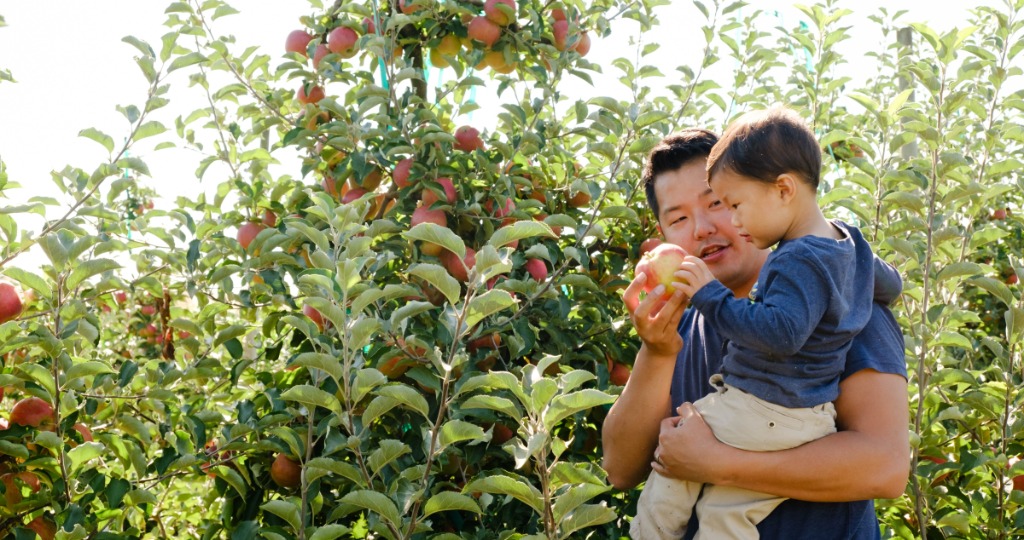
Many of the Willamette Valley's top crops experience a short harvest season that might be measured in weeks. But for Brian Bauman, general manager at Bauman's Farm and Garden, the apple harvest begins as early as late July—and continues through the end of October.
The Bauman family has been farming since 1895 and has been in its current location just outside of Woodburn since 1977. Today, the family-run farm grows about 45 varieties of apple, each with different ripeness windows—hence the longer-than-average harvest.
Anyone hoping to try the farm's apples can do so at an on-site farm store, where free samples of up to 15 rotating varieties are available at any given time. “An apple that's been freshly harvested tastes so much different than if it's on store shelves," Brian Bauman says. "Tasting all the different fresh varieties as they come in each week is a very unique, very cool experience. It's a great opportunity to try new things.”
The apple experiences don't end there. Stop by the Bauman's Harvest Festival, which runs Tuesdays-Sundays between mid-September and late October, to watch raw juice being pressed and to try candied apples and cider made with Bauman's fruit.
Hazelnut Harvest a Family Affair for Monmouth-Area Farmer
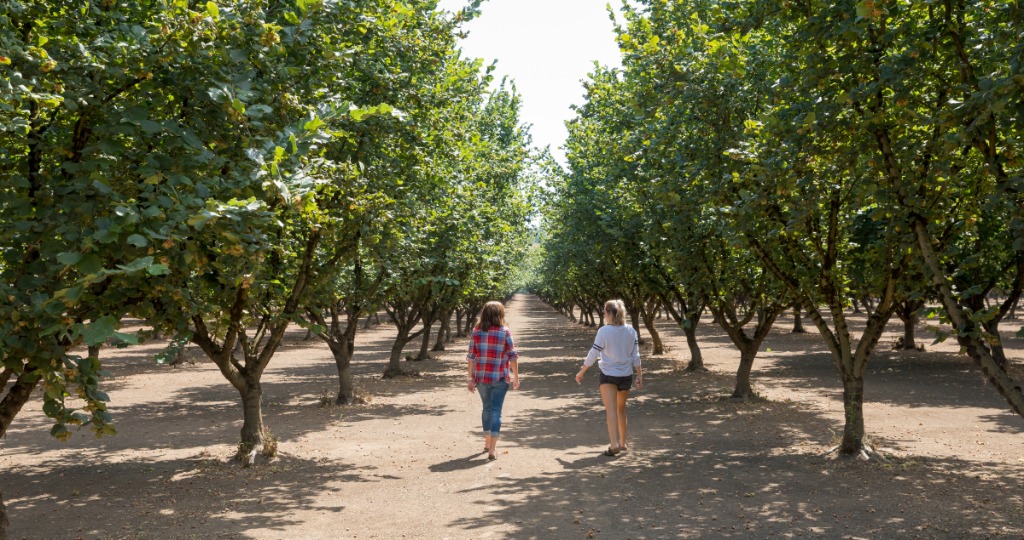
Roughly 99 percent of all hazelnuts grown in the United States come from the Willamette Valley, and the rich, earthy nut is harvested a bit differently than some of our other crops. In short: Farmers must wait for the nut to fall off the tree before harvesting—and hope that happens before the first rains arrive in autumn.
Barb Foulke, owner of Freddy Guys Hazelnuts, says there's a lot of anticipation when the first nuts start falling in early September. “You have to sit and watch them fall, and you watch and watch and watch—and then there comes a point where either you just can't stand it any longer or you see that the weather is changing," she says. "And that's when you gotta go.”
Harvest on the 200-acre farm usually lasts two weeks, and Foulke takes pride in gathering, pruning, and cleaning hazelnuts alongside her children, their spouses, and even grandchildren. “It turns into a family reunion," Foulke says—often with group dinners and sleepovers.
Freddy Guys isn't typically open to the public, but you can buy the farm's nuts (available raw, dry-roasted, seasoned, and even covered in chocolate) straight from the farm's website—as well as at Market of Choice grocery stores in Eugene and Corvallis and the PSU Farmers Market in Portland.
Hop Harvest and the Rise of Fresh-Hop Beers
Wine grapes might be the Willamette Valley's best-known crop, but the community of Independence was once known as the “the hops capital of the world” in the late 1800s and early 1900s.
Today, Coleman Agriculture is one of several growers carrying on that tradition and supplying regional craft breweries with aroma hops. For Ivy Hover, marketing and sales specialist at Coleman Agriculture, there's no more exciting time of year than hop harvest—which begins in mid-August and continues, almost uninterrupted, for a solid month. “You can literally smell on the farm when things are starting to get ripe," Hover says.
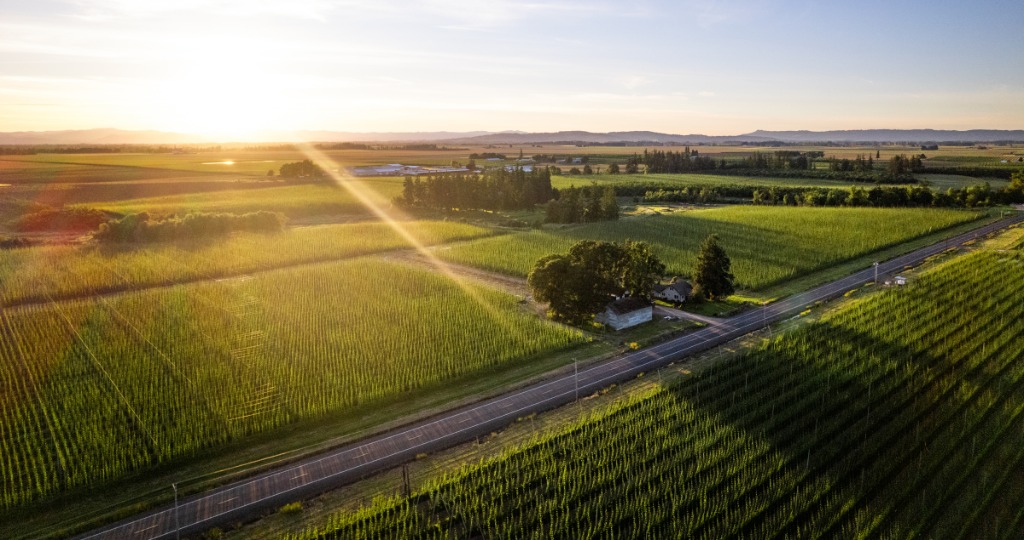
Between August and September, the Coleman team doubles in size as they feverishly pick hops at four farms around St. Paul, Mt. Angel, and Independence. In all, Coleman grows about 15 varieties and produces roughly 2 million pounds of hops.
Many of those hops are processed and frozen for use throughout the year, but a number are sent straight to breweries who toss them into beers-in-progress within 24 hours of being picked to produce what are known as fresh-hop beers. “It's like Oregon's fifth season: fresh-hop beer season," Hover jokes.
These beers, usually only available between mid-August and October, reflect the flavor profiles of the fresh hops they're made with—and can sport strong pine notes, intense citrus flavors, and so forth. Sample fresh-hop beers made with Coleman’s hops at Parallel 45 Brewing in Independence, Silver Falls Brewery in Silverton, ColdFire Brewery & Public House in Eugene, and at the Hop & Heritage Festival—taking place September 26, 2026, in Independence.
Wine Grape Harvest a New Experience Every Autumn
So many factors impact how your wine tastes: What kind of soil were the grapes planted in? Was it a particularly hot or surprisingly cool summer leading up to the fall harvest? Were those grapes planted on a south-facing slope, which impacts how much sun they see?
Taylor Pfaff, CEO and a member of family ownership of Left Coast Estate, loves how all those factors come together to create one-of-a-kind wines each year—and they all come together during harvest in the Willamette Valley. “It’s not a process that can be forced, because it's driven by the agricultural cycle and the changing seasons," he says. “You only encounter it for such a limited amount of time, and you can only encounter it so many times in your life. So because of that, each year is memorable, and each year is different.”
For Pfaff and his team, harvest begins between late August and late October. The Left Coast team typically begins picking grapes in early September and wraps up picking, crushing, and fermenting the winery's fruit by the end of October. Workers put in long hours to get grapes off the vine and wines into fermentation tanks, and Pfaff admits it takes a "committed mindset" to pull it all off each fall.
Even so: It's a process he and the team have looked forward to since January, thanks in part to how different each harvest is—and how that might impact the next vintage. "That's the really fun thing about making wine in Oregon: We get such different weather every year," he says. "That vintage really matters and what we're dealing with is always a little bit variable.”
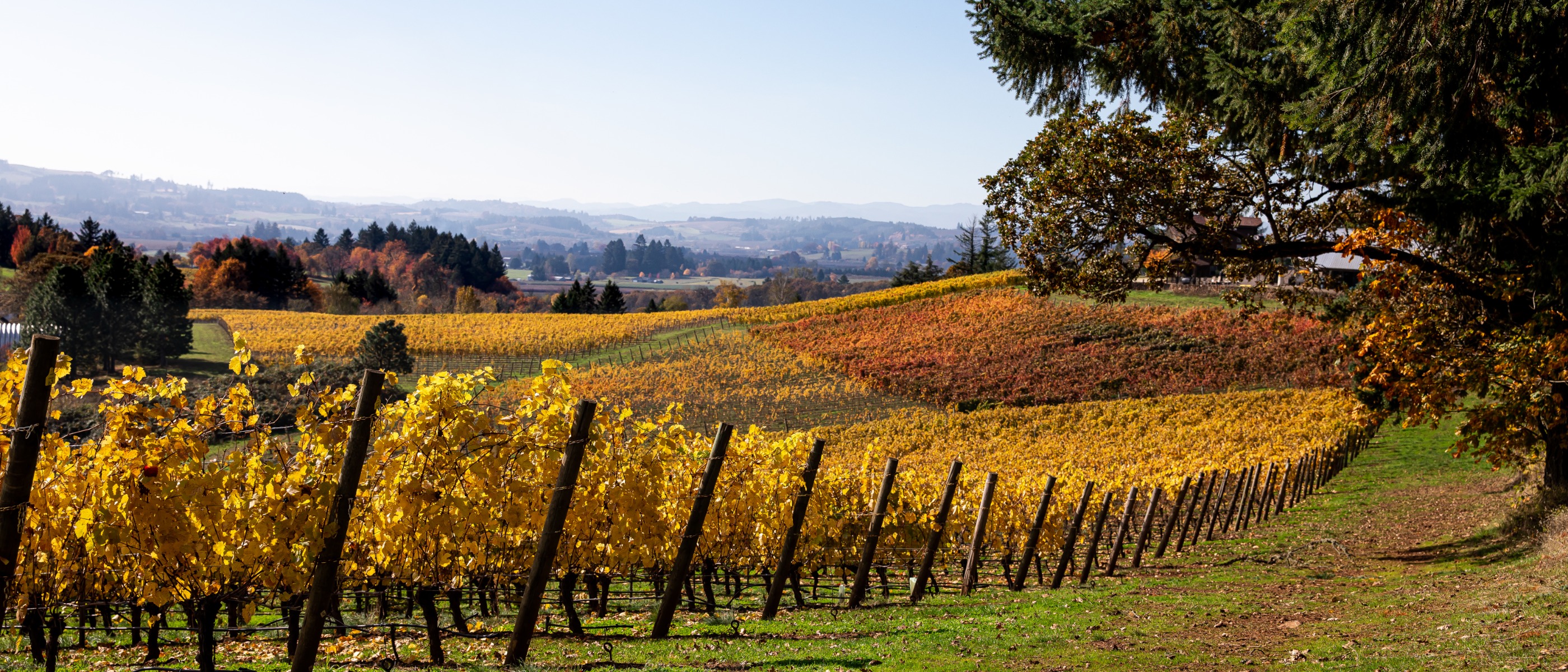
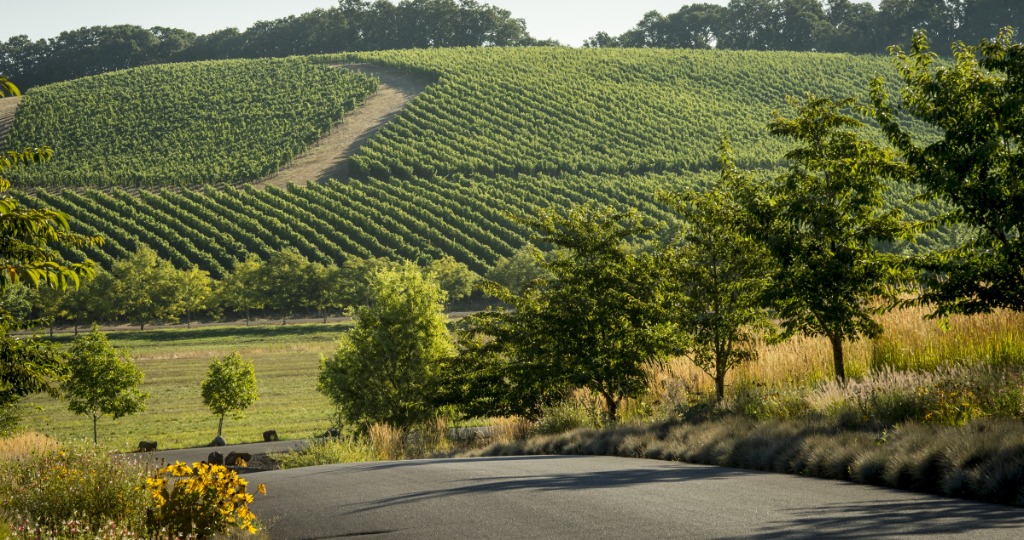
See how past vintages compare at the Left Coast Estate tasting room just outside Salem, and check out other winery tasting rooms near Salem and Albany to continue your tasting adventures. Pfaff says that fall is an especially delightful time to sip your way through the region. “Some of the most beautiful times to go out and visit a vineyard are in October when those canopies start changing colors and leaves start dropping,” he says. “The properties only look like that for a couple weeks of the year, and it's one of the most beautiful times to be out there.”
Pumpkin Patches at the Heart of Fall Festivals
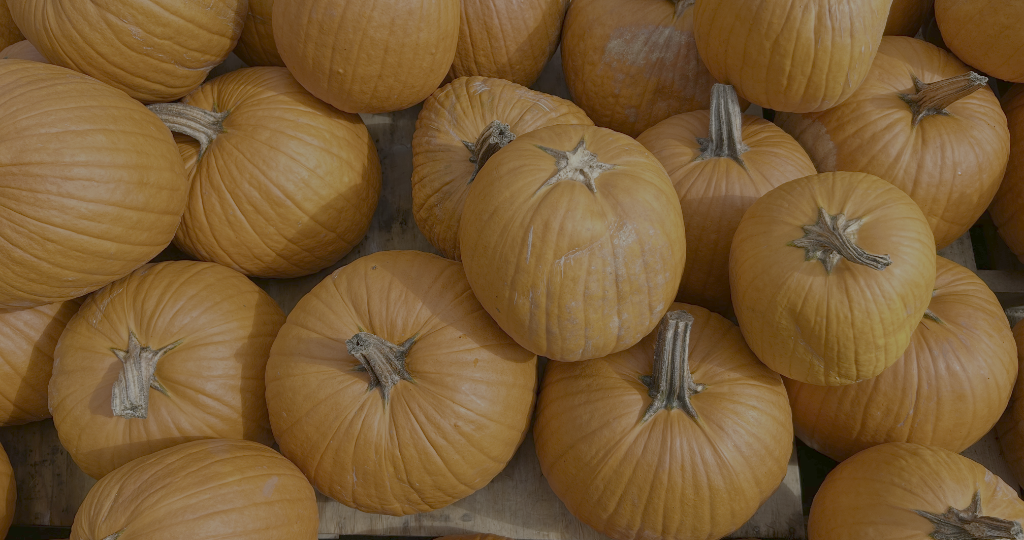
It’s nearly impossible to drive around the Willamette Valley in October without noticing one of our most popular and beloved crops: pumpkins.
In all, Oregon farmers grow about 2,600 acres of pumpkins across 400 farms statewide—with most of that acreage coming in the Willamette Valley. Harvest starts when growers cut pumpkins from the vine in September and October—at which point they’re placed in patches for easy picking. If you’d like to pick your own pumpkin this fall, check out our guide to harvest festivals in the Willamette Valley; most include seasonal foods, petting zoos, hayrides, and—of course—pumpkin patches.